
Hara Hachi Bu: The Japanese Art of Eating Until 80% Full

Hara Hachi Bu: The Japanese Art of Eating Until 80% Full
How mindful eating, Japanese food culture, green tea and daily rituals support wellbeing from within.
In Japanese wellness culture, health is rarely treated as something separate from daily life. It is not only found in a product, a supplement, or a routine followed for a few weeks. It is often built quietly — through food, tea, movement, rest, gratitude and consistency.
One of the most meaningful examples of this philosophy comes from Okinawa, Japan: Hara Hachi Bu.
The phrase is often translated as “eat until you are 80% full.” More than a diet rule, it is a reminder to pause before excess. To listen to the body. To leave the table feeling light, comfortable and satisfied — not heavy or overfilled.
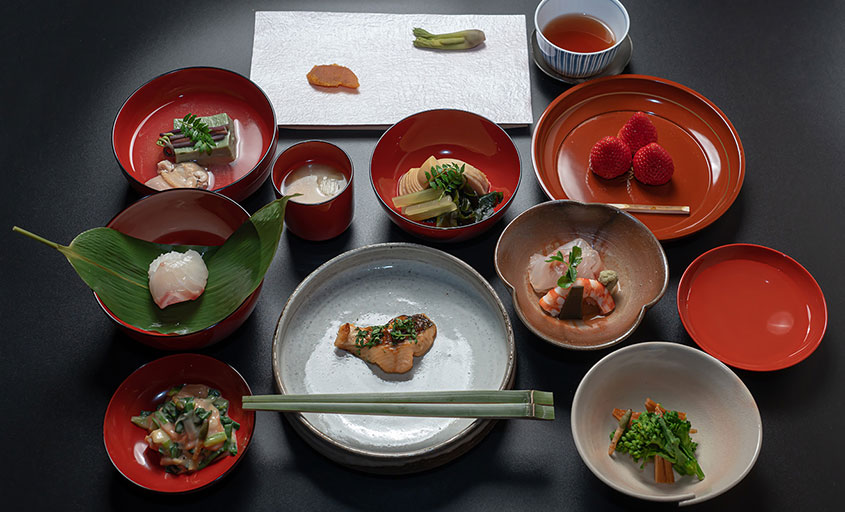
The concept has been associated with Okinawan elders and longevity culture. The U.S. National Institutes of Health describes Hara Hachi Bu as a Confucian-inspired Japanese concept linked to mindful eating: stopping when you feel around 80% full. The same NIH article notes that modest calorie restriction, when done without malnutrition, is being studied for its potential role in healthy ageing and biological resilience.
But at Yukari, we do not see Hara Hachi Bu as restriction.
We see it as balance.
It is the opposite of modern excess. It is not about eating less to punish the body. It is about eating with awareness, choosing quality over quantity, and creating a healthier relationship with nourishment.
This is where the Japanese approach to wellbeing becomes so powerful.
Traditional Japanese food culture, known as Washoku, is recognised by UNESCO as an intangible cultural heritage. It is based on respect for nature, seasonal ingredients, rice, fish, vegetables, edible wild plants and shared meals. Japan’s Ministry of Agriculture, Forestry and Fisheries also describes Washoku as a dietary culture with strong nutritional balance, built around rice, vegetables, seafood and seaweed.
In other words, Japanese wellness is not only about what is eaten.

It is about how food is approached.
Small portions. Seasonal ingredients. Fermented foods. Green tea. Simple meals. Gratitude before eating. A slower pace. A respect for the body’s natural signals.
Modern research also supports the wider value of this pattern. A large BMJ study of Japanese adults found that closer adherence to the Japanese Food Guide Spinning Top was associated with a lower risk of total mortality and cardiovascular mortality over 15 years. Another review in the European Journal of Clinical Nutrition notes that the typical Japanese diet — rich in plant foods and fish, with modest Westernised food intake — may be associated with Japan’s longevity.
For skin, this connection must be spoken about carefully. Food is not skincare, and no diet can promise perfect skin. But the skin does not exist separately from the rest of the body.
Hydration, stress, digestion, sleep, inflammation, nutrients and lifestyle all influence how we feel — and often how our skin appears over time.
This is why the concept of beauty from within matters.

Research on the gut-skin axis continues to explore how the gut microbiome, immune system and skin health may communicate with one another. Recent reviews describe the gut-skin axis as a growing area of scientific interest, especially in relation to inflammation and skin conditions. Fermented foods, a common part of Japanese food culture through ingredients such as miso, soy-based foods and koji traditions, have also been shown to influence the gut microbiome.
Green tea offers another important bridge between Japanese ritual and modern wellness. Clinical review evidence suggests oral green tea preparations have the strongest support in relation to helping protect skin from UV-induced damage, although broader skin claims still require more research. This is why, at Yukari, we speak about green tea not as a miracle, but as a daily ritual rich in tradition, antioxidants and calm.
Hara Hachi Bu teaches us something deeper than portion control.
It teaches us that wellbeing is not created through intensity.
It is created through rhythm.

A cup of tea instead of rushing. A meal eaten slowly. A skincare routine done with care. A moment of gratitude before nourishment. A decision to stop before excess. These small choices may seem simple, but repeated daily, they become a way of living.
This is the heart of Yukari’s IN/OUT philosophy.
IN is what we take into the body: tea, food, breath, calm, nourishment.
OUT is how we care for the skin: gentle cleansing, hydration, barrier support and consistency.
Together, they form a more complete idea of beauty.
Not perfection.
Not pressure.
Not extremes.
Just balance, repeated every day.
Hara Hachi Bu reminds us that true wellness often begins before we are completely full — in the quiet space where the body still feels light, the mind feels calm, and the ritual is complete.
